Story
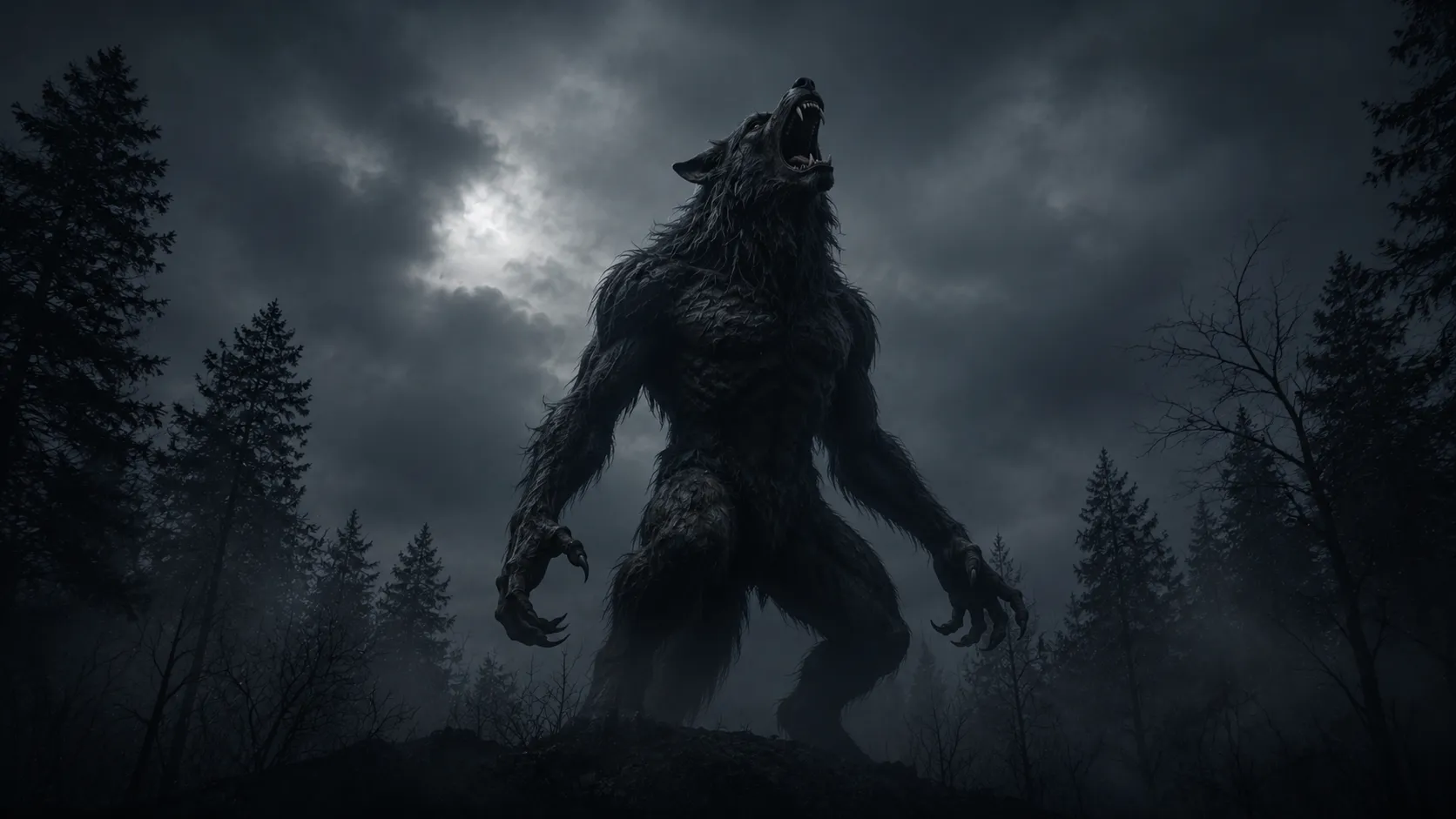
The Werewolf is one of the most famous creatures in world folklore. According to legend, it is a human being capable of transforming into a wolf or a hybrid human-wolf creature during nights of the full moon.
The transformation is often linked to a curse, a bite, or an ancient ritual. Once transformed, the werewolf usually loses control of its actions and becomes an extremely aggressive creature driven by its most primitive instincts.
Stories describe the werewolf as possessing superhuman strength, incredible speed, heightened senses, and remarkable resistance to injury. In many legends, only silver weapons are capable of injuring or permanently killing it.
Over the centuries, numerous werewolf stories emerged throughout Europe. Some even led to real trials during the Middle Ages and the Renaissance, where individuals were accused of lycanthropy and convicted of crimes attributed to their supposed transformations.
Today, the werewolf remains an iconic figure of horror and fantasy, appearing in countless novels, films, television series, and video games.
Credits and origin
The Werewolf myth has its roots in European traditions, particularly in France, Germany, the Nordic countries, and Eastern Europe.
The term "lycanthropy" comes from the Ancient Greek words "lukos" (wolf) and "anthropos" (man). Several ancient accounts already mention humans capable of taking on the appearance of wolves.
Modern werewolf legends were largely popularized through Gothic literature, fantasy cinema, and contemporary horror stories.
Main inspirations:
• Wolves and wild predators
• Folkloric curses
• Mythological transformations
• Medieval European beliefs
• Full moon legends
• Tales of horror and human monstrosity
Origin: European folklore
Type: Legendary creature
Main power: Human-to-wolf transformation
Legendary weakness: Silver
Popularization: Mythology, literature, cinema, and video games