Loch Ness Monster
By ABYSSGENERATED
Published: 2026-06-10
Updated: 2026-06-16
Discover the Loch Ness Monster, a mysterious aquatic creature that has fascinated the world for nearly a century and remains one of cryptozoology's greatest mysteries.
The Origin of the Loch Ness Monster
The Loch Ness Monster, affectionately known as "Nessie," is undoubtedly the world's most famous cryptid. For centuries, the dark and mysterious waters of Loch Ness, located in the Scottish Highlands, have inspired stories of a strange creature lurking beneath the surface. Sightings reported by fishermen, travelers, and local residents have transformed Nessie into one of the greatest unsolved mysteries in modern folklore and cryptozoology. Stretching approximately 37 kilometers (23 miles) and reaching depths of over 230 meters (750 feet), Loch Ness is one of the largest freshwater lakes in the United Kingdom. Its waters are exceptionally dark due to the high concentration of peat, making underwater visibility extremely poor. This unique environment has helped fuel speculation that an unknown creature could remain hidden beneath the lake's surface. The earliest known account dates back to the 6th century. According to the biography of Saint Columba written by Adomnán, the Irish missionary encountered a terrifying "water beast" in the River Ness. After making the sign of the cross and commanding the creature to retreat, it disappeared into the water. Although this story is widely regarded as a religious legend rather than historical evidence, it remains one of the oldest references connected to the Nessie myth. For centuries these stories remained local traditions. It was not until the early 20th century that the Loch Ness Monster captured worldwide attention through newspaper reports and eyewitness accounts, becoming one of history's most famous unexplained phenomena.
The Most Famous Sightings
The modern legend truly began in 1933 when George Spicer and his wife claimed to have witnessed an enormous animal crossing the road in front of their car before disappearing into Loch Ness. They described a massive creature with a long neck and a bulky body, unlike anything they had ever seen. Their report sparked international interest, and soon dozens of additional witnesses claimed to have seen mysterious shapes moving across the lake. Some described several humps breaking the surface, while others reported seeing a long neck rising briefly from the water before vanishing. In 1934, the image that would become known as the "Surgeon's Photograph" was published. It appeared to show a small head and long neck emerging from the water and quickly became the most famous photograph ever taken of Nessie. For more than sixty years, many considered it the strongest evidence supporting the creature's existence. However, in 1994, several participants admitted that the photograph had been an elaborate hoax created using a toy submarine fitted with a small model. Although the photograph was exposed as fake, public fascination with Nessie only continued to grow.
What Does Nessie Look Like?
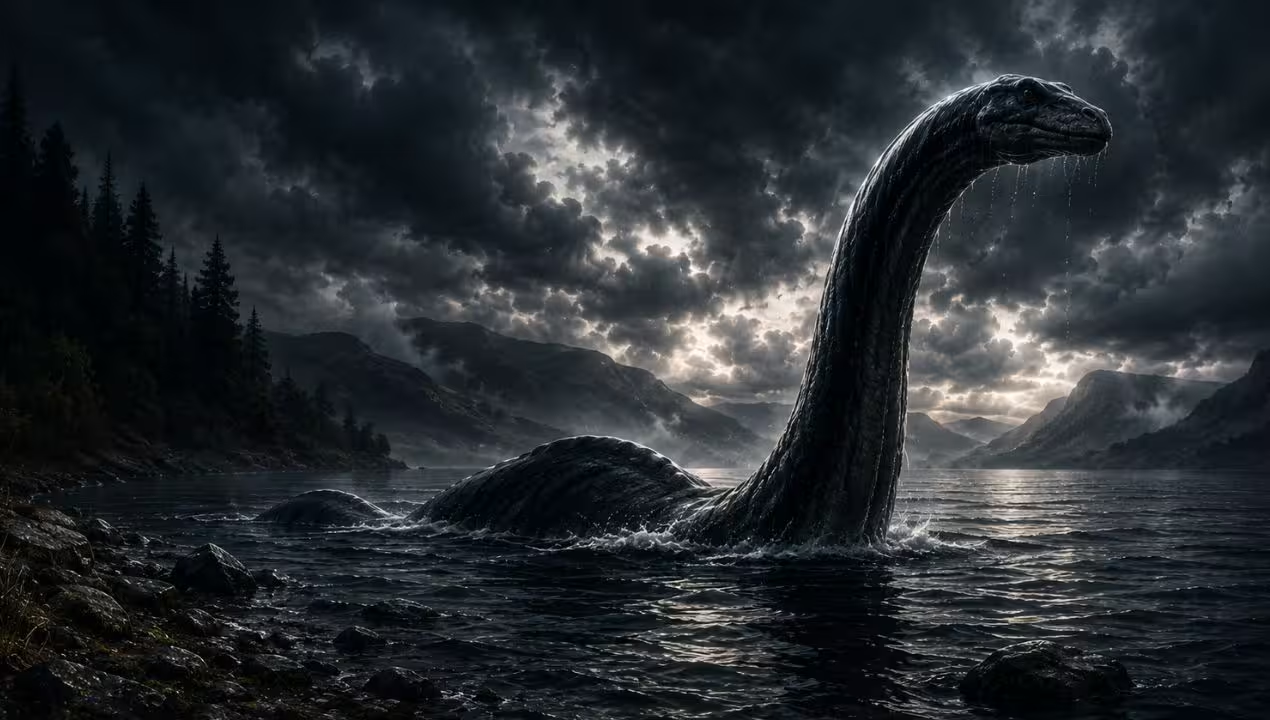
Descriptions vary depending on the witness, but several characteristics appear consistently.
According to eyewitness reports, Nessie is often described as having:
- A body measuring between 6 and 15 meters (20–50 feet) long.
- A long, flexible neck.
- A relatively small head.
- One or more humps visible above the water.
- Dark gray or brown skin.
- Powerful flippers or fins.
- A large tail used for swimming.
These features led many enthusiasts to compare Nessie to a plesiosaur, an extinct marine reptile that lived during the age of dinosaurs. Although this theory has become one of the most popular explanations, scientists consider it highly unlikely.
Scientific Expeditions
Few legendary creatures have been investigated as extensively as the Loch Ness Monster. Beginning in the 1960s, researchers installed automatic cameras around the lake in an attempt to capture photographic evidence. During the 1970s and 1980s, sonar technology was used to explore the depths of Loch Ness. Several unexplained sonar contacts generated excitement, but none could be confirmed as evidence of an unknown animal. In 1987, Operation Deepscan brought together twenty-four boats equipped with sonar systems that crossed the lake side by side, scanning much of its underwater environment. While a handful of unusual readings were recorded, no definitive conclusions could be drawn. More recently, drones, remotely operated underwater vehicles, high-definition cameras, and advanced sonar equipment have been employed, yet no convincing proof of Nessie's existence has been discovered. In 2018, an international team of scientists conducted an environmental DNA (eDNA) survey by analyzing hundreds of water samples. The results found no evidence of large prehistoric reptiles but revealed significant amounts of eel DNA, suggesting that unusually large eels could explain at least some reported sightings.
The Leading Theories
Over the decades, numerous explanations have been proposed to solve the mystery.
A Surviving Plesiosaur
The most famous theory suggests that Nessie is a surviving plesiosaur that somehow escaped extinction more than 65 million years ago. While popular in books and documentaries, this hypothesis faces major scientific challenges, including the absence of fossil evidence and the difficulty of sustaining a breeding population in a relatively small freshwater lake.
An Unknown Species
Some cryptozoologists believe Nessie may belong to an undiscovered species of aquatic animal that has adapted perfectly to the unique conditions of Loch Ness. To date, however, no physical evidence supports this idea.
Giant Eels
Following the environmental DNA study, giant European eels became one of the most discussed explanations. Although ordinary eels can grow surprisingly large, scientists remain uncertain whether they could account for every reported sighting.
Natural Phenomena
Many researchers believe that waves, floating logs, unusual reflections, seismic activity, or optical illusions are responsible for a large number of sightings. The lake's dark waters and unpredictable weather can easily distort the appearance of ordinary objects.
Hoaxes and Misidentifications
Several famous photographs and videos have later been revealed as deliberate hoaxes or simple misidentifications involving boats, birds, seals, deer, or floating debris. Even so, not every eyewitness account can be easily dismissed, allowing the mystery to endure.
Why Does the Mystery Continue?
Despite decades of scientific investigation, Nessie continues to capture the imagination of millions of people around the world. Loch Ness possesses an atmosphere unlike almost anywhere else. Mist-covered hills, ancient castles, dark waters, and Scotland's rich folklore create the perfect setting for one of history's greatest legends. Every new photograph, video, sonar reading, or eyewitness report reignites public interest and inspires fresh debates between skeptics and believers. Modern social media has only amplified the phenomenon, allowing alleged sightings to spread across the globe within hours.
The Loch Ness Monster in Popular Culture
Today, Nessie has become far more than a local Scottish legend. The creature appears in countless books, films, television series, documentaries, comics, and video games. It has become one of Scotland's most recognizable cultural icons and a major attraction for visitors from around the world. Hundreds of thousands of tourists travel to Loch Ness every year hoping to catch even a brief glimpse of the legendary creature. Whether Nessie is an undiscovered animal, a misunderstood natural phenomenon, or simply one of humanity's greatest modern legends, the Loch Ness Monster remains one of the most enduring mysteries in cryptozoology. More than ninety years after the first widely publicized sightings, the legend continues to inspire curiosity, debate, and the timeless hope that one day the truth will finally emerge.
Credits and origin
Origins of the Loch Ness Monster Legend
The legend of the Loch Ness Monster has its roots in Scottish folklore and the rich traditions of the Highlands. Long before Nessie became a worldwide phenomenon, local communities shared stories of mysterious creatures inhabiting Scotland's deep lochs, rivers, and remote waters. The earliest known reference dates back to the 6th century in the Life of Saint Columba, where a "water beast" is said to have appeared in the River Ness. Although this account is generally regarded as a religious legend rather than historical evidence, it is considered one of the oldest stories associated with the Loch Ness Monster. The modern legend truly emerged in 1933, when a series of widely publicized sightings captured international attention. Newspapers around the world reported eyewitness accounts, and Nessie quickly became one of the most famous unexplained creatures in history. Since then, countless investigations, documentaries, and scientific expeditions have attempted to uncover the truth behind the legend.
Main Inspirations
The Loch Ness Monster legend draws inspiration from:
- Scottish folklore and Highland traditions
- Ancient tales of mysterious water creatures
- Prehistoric marine reptiles, particularly the plesiosaur
- Misidentified natural phenomena and wildlife
- Eyewitness reports and cryptozoological investigations
Quick Facts
Origin: Scottish folklore Type: Cryptid Nickname: Nessie Earliest Mention: 6th century (Life of Saint Columba) Modern Popularity: Since 1933, following highly publicized eyewitness sightings Supposed Habitat: Loch Ness, Scottish Highlands Status: No conclusive scientific evidence has confirmed its existence despite decades of investigations and expeditions
FAQ
Does the Loch Ness Monster really exist?
To this day, there is no conclusive scientific evidence proving the existence of the Loch Ness Monster. Despite numerous expeditions, sonar surveys, and DNA studies, the mystery remains unsolved.
When was the Loch Ness Monster first reported?
The earliest known account dates back to the 6th century in the Life of Saint Columba. However, the modern legend began in 1933 after a series of highly publicized eyewitness sightings.
Why is the Loch Ness Monster called 'Nessie'?
Nessie is an affectionate nickname popularized by the media and the public. It has become the most widely recognized name for the mysterious creature said to inhabit Loch Ness.
What is the Loch Ness Monster supposed to look like?
Witnesses often describe Nessie as having a long neck, a small head, a massive body with one or more humps, dark-colored skin, and powerful fins. Many compare it to a prehistoric plesiosaur.
What are the main explanations for the sightings?
Theories include an unknown animal, unusually large eels, seals, floating logs, optical illusions, natural phenomena, and deliberate hoaxes or misidentifications.
Why does the Loch Ness Monster continue to fascinate people?
The lack of definitive proof, hundreds of eyewitness reports, the mysterious atmosphere of Loch Ness, and decades of media coverage have kept the legend alive for generations.