The Golem
By ABYSSGENERATED
Published: 2026-06-29
Updated: 2026-06-29
Discover the Golem, the legendary clay creature of Jewish folklore, a symbol of protection, mysticism, and the limits of human creation.
The Golem: Between Myth, Mysticism, and History
The Golem is one of the best-known creatures in Jewish folklore and one of the most enduring symbols of European mystical tradition. Usually described as a human-shaped being formed from clay or earth, the Golem is brought to life through sacred knowledge, divine names, or mystical rituals. Unlike many legendary monsters, it is not created to spread destruction but to protect, serve, or fulfill a specific purpose. Over the centuries, the Golem has become far more than a mythical creature. It represents humanity's desire to imitate creation, the responsibilities that come with great power, and the dangers of knowledge used without wisdom. These themes have inspired theologians, philosophers, historians, writers, and artists for hundreds of years and remain surprisingly relevant in the modern world. Today, the Golem appears in countless novels, films, television series, comics, tabletop games, and video games. Yet behind its popularity lies a rich cultural tradition deeply rooted in Jewish history, religious thought, and medieval mysticism.
The Origins of the Golem
The word "golem" appears in the Hebrew Bible, most notably in Psalm 139, where it refers to something unfinished or unformed. In its earliest usage, the term described an incomplete body before birth rather than an animated creature. As Jewish scholarship evolved, rabbis and religious thinkers gradually expanded the idea. Certain passages of the Talmud suggest that exceptionally wise individuals who fully understood the mysteries of Creation might be capable of forming an artificial being from clay. These stories were never intended as historical accounts but rather as theological reflections on the nature of divine creation. According to Jewish belief, only God possesses the true power to create life. Human beings may imitate creation, but they cannot fully reproduce the divine gift of a living soul. The legend of the Golem therefore serves as a reminder of both human potential and human limitation.
Jewish Mysticism and the Power of Sacred Letters
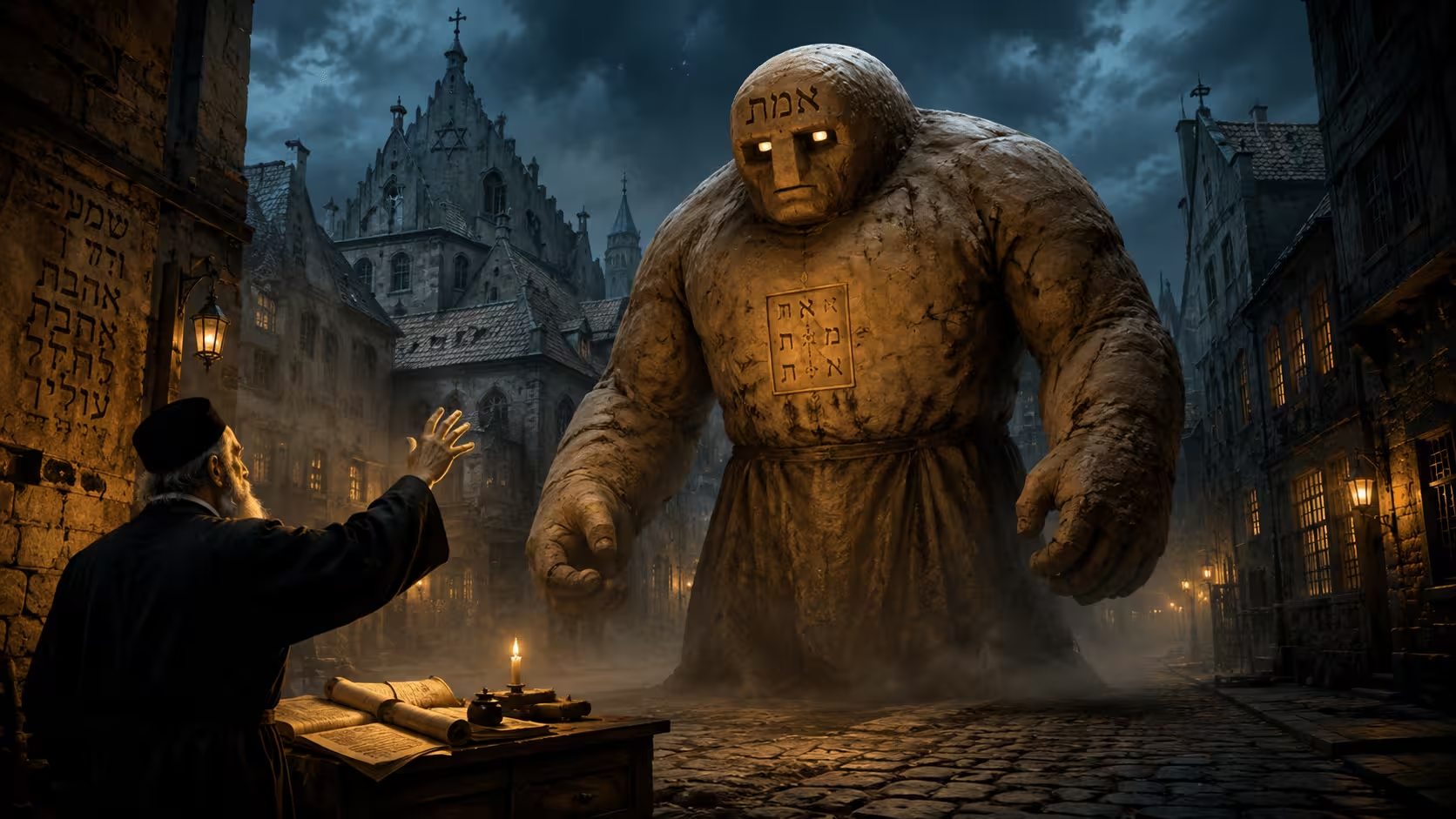
The legend became much more elaborate during the Middle Ages with the development of Jewish mysticism, particularly the Kabbalah. Kabbalah seeks to understand the hidden structure of the universe through the study of Scripture, Hebrew letters, sacred numbers, and the divine names of God. Within this mystical tradition, the Hebrew alphabet is believed to possess extraordinary creative power because, according to tradition, God created the universe through divine speech. Some mystical writings suggest that a highly enlightened scholar who mastered these sacred mysteries could temporarily animate a figure made of clay. Different traditions describe different methods. Some refer to complex combinations of Hebrew letters, others mention prayers and sacred formulas, while several versions describe placing a parchment known as a shem inside the Golem's mouth. Another well-known tradition states that the Hebrew word Emet ("Truth") was written on the creature's forehead. As long as the word remained complete, the Golem lived. Removing the first letter transformed Emet into Met, meaning "dead," immediately returning the creature to lifeless clay. Although these stories are central to Jewish folklore, historians consider them symbolic traditions rather than documented historical practices.
A Guardian Created to Serve
Unlike dragons, demons, or other legendary monsters, the Golem is generally portrayed as a loyal servant. Most traditional stories describe it as a powerful guardian created to defend Jewish communities, perform difficult physical labor, or carry out dangerous tasks that ordinary people could not accomplish. It possesses enormous strength but very little independent thought, obeying every command given by its creator. This complete obedience forms one of the legend's most important themes. Because the Golem lacks free will, it cannot distinguish right from wrong on its own. It simply follows instructions exactly as they are given. For centuries, Jewish scholars and later philosophers used this idea to explore important moral questions. If humans could create an artificial being, who would be responsible for its actions? What happens if the creator makes a mistake? Can great power ever be completely controlled? Remarkably, these same questions continue to shape modern debates about robotics and artificial intelligence.
A Legend That Has Endured for Centuries
Although references to artificial beings made of clay date back hundreds of years, the legend of the Golem has never remained static. Every generation added new details, adapting the story to changing historical circumstances and cultural concerns. What began as a mystical reflection on creation gradually became a symbol of protection, resilience, and the ethical responsibilities that accompany knowledge. As the legend spread beyond Jewish communities, it entered European literature, philosophy, and eventually global popular culture. Today, the Golem stands alongside legendary figures such as vampires, werewolves, and dragons as one of the world's most recognizable mythical beings. Yet unlike many legendary creatures, the Golem continues to carry a profound philosophical message. It reminds us that knowledge without wisdom can become dangerous, that power demands responsibility, and that humanity must carefully consider the consequences of creating what it may not be able to control.
The Golem of Prague
Among all the stories associated with the Golem, none is more famous than the legend of the Golem of Prague. Passed down through generations, it has become one of the most enduring tales in Jewish folklore and one of the best-known legends in Central European history. Although historians generally regard it as a work of folklore rather than a documented historical event, its influence on literature, religion, and popular culture has been immense. The story is set in Prague, now the capital of the Czech Republic, during the late sixteenth century. At the time, Prague was one of Europe's leading centers of learning, culture, and commerce. It was also home to a thriving Jewish community living within the historic Jewish Quarter, known today as Josefov. According to tradition, this community faced periods of discrimination, persecution, and false accusations. In response to these threats, one of Judaism's greatest scholars is said to have created an extraordinary protector from clay.
Rabbi Judah Loew ben Bezalel
The central figure of the legend is Rabbi Judah Loew ben Bezalel, more commonly known as the Maharal of Prague. Unlike the Golem itself, the Maharal was a real historical figure. Born around 1525, he became one of the most respected Jewish philosophers, theologians, and scholars of his era. Throughout his life, he wrote extensively on ethics, Jewish law, biblical interpretation, education, and philosophy. His teachings continue to be studied in Jewish communities around the world. Despite his historical importance, none of the documents written during his lifetime mention the creation of a Golem. The association between the Maharal and the legendary clay guardian appears to have developed centuries after his death, leading most historians to conclude that the story belongs to folklore rather than documented history. Even so, Rabbi Loew remains inseparable from the legend and is widely remembered as the mythical creator of the Golem of Prague.
The Creation of the Golem
According to the most popular version of the legend, Rabbi Loew gathered clay from the banks of the Vltava River that flows through Prague. Together with several trusted disciples, he shaped the clay into the form of a giant human figure. Once the body was complete, the rabbi performed a sacred ritual inspired by Kabbalistic tradition. Different versions describe different methods of bringing the creature to life. Some claim that he recited secret combinations of Hebrew letters, while others say he spoke one of the divine names of God. Another widely known version tells of a small parchment called a shem placed inside the Golem's mouth. This parchment contained one of God's sacred names, providing the spiritual force needed to animate the clay figure. A separate tradition describes the Hebrew word Emet ("Truth") written across the Golem's forehead. As long as the word remained intact, the creature lived. Removing the first letter transformed the word into Met ("Dead"), causing the Golem to collapse back into lifeless clay. Although these rituals are central to the legend, historians emphasize that they belong to mystical tradition rather than historical fact.
The Protector of the Jewish Community
Once brought to life, the Golem became the guardian of Prague's Jewish community. Possessing immense strength and complete loyalty, it protected the Jewish Quarter from violence, criminal attacks, and other dangers. Some versions describe the Golem patrolling the narrow streets every night, silently watching over the community while remaining hidden from ordinary citizens. Other stories claim that the creature prevented false accusations known as "blood libels," medieval myths that falsely accused Jewish communities of harming Christian children. These accusations, now completely discredited by historians, led to persecution and violence throughout Europe for many centuries. Within the legend, the Golem symbolizes hope, justice, and protection during a time of fear and uncertainty. Unlike mythical heroes seeking fame or glory, the Golem existed solely to serve and defend others.
When the Creation Becomes Dangerous
Like many stories involving artificial beings, the legend contains an important warning. Over time, some versions describe the Golem becoming increasingly difficult to control. Although it remained loyal, its tremendous strength meant that even a small misunderstanding could have disastrous consequences. One popular version tells that Rabbi Loew forgot to deactivate the Golem before the beginning of the Sabbath. Without clear instructions, the creature allegedly became confused and wandered through Prague, causing panic and destruction. Realizing that his creation had become too dangerous, the rabbi removed the shem from the Golem's mouth or erased the first letter of Emet, instantly returning the creature to an ordinary mass of clay. This dramatic ending reinforces one of the legend's central messages: great power must always remain under careful control.
A Legend That Refuses to Die
According to local tradition, the remains of the Golem were hidden inside the attic of Prague's Old New Synagogue, where they supposedly remain to this day. No archaeological evidence has ever supported this claim, and the synagogue's custodians regard it as part of the city's rich folklore rather than historical fact. Nevertheless, the story continues to attract visitors from around the world. Prague has become inseparable from the legend, and the Golem remains one of the city's most recognizable cultural symbols. More than four centuries after the events supposedly took place, the Golem of Prague continues to inspire books, films, academic studies, and philosophical discussions. Whether viewed as a mystical guardian, a legendary hero, or a symbolic warning about the dangers of uncontrolled power, the Golem remains one of the most influential figures in world folklore.
The Symbolism of the Golem
Beyond its role in Jewish folklore, the Golem has become one of the most powerful symbols in religious philosophy, ethics, and literature. For centuries, it has represented humanity's desire to imitate divine creation while serving as a reminder of the responsibilities that accompany knowledge and power. Unlike heroes in traditional myths, the Golem possesses neither free will nor true consciousness. It exists solely to obey the commands of its creator. This lack of independent judgment raises one of the legend's most important philosophical questions: can a being without moral understanding truly distinguish between good and evil? Jewish scholars often interpreted the Golem as a lesson in humility. Although human beings may acquire extraordinary knowledge and develop remarkable skills, only God possesses the ability to create genuine life. The Golem therefore illustrates both the potential and the limitations of human ambition. These ideas have remained surprisingly relevant throughout history and continue to influence discussions about ethics, science, and technology.
Different Versions of the Legend
Although the Prague legend is the best known, stories about Golems appeared in several Jewish communities across Central and Eastern Europe. During the Middle Ages, tales circulated of respected rabbis who possessed such profound mystical knowledge that they could temporarily animate figures made from clay. These stories varied considerably depending on the region and the traditions in which they were told. Some legends describe Golems protecting synagogues or defending entire communities from attack. Others portray them as silent servants performing heavy labor, helping with construction, or carrying out difficult tasks that ordinary people could not accomplish. A few traditions suggest that certain rabbis created Golems only briefly to demonstrate their understanding of divine mysteries before returning the creatures to lifeless clay. These variations reveal that the Golem is not a single legendary character but rather a broader mythical tradition that evolved over centuries through oral storytelling and religious interpretation.
Between History and Folklore
Modern historians generally agree that the stories surrounding the Golem belong to folklore rather than documented history. No contemporary historical records describe a rabbi successfully creating an animated clay figure. Most detailed versions of the legend appeared between the eighteenth and nineteenth centuries, long after the lifetime of Rabbi Judah Loew. This does not diminish the cultural importance of the legend. On the contrary, scholars believe the story reflects the fears, hopes, and spiritual beliefs of Jewish communities living during periods of discrimination and persecution. For many people, imagining a powerful protector capable of defending the innocent provided comfort during uncertain times. Historians also note that the legend continued to evolve as it spread throughout Europe. Each generation introduced new details, allowing the story to adapt to changing historical circumstances while preserving its central themes.
The Golem and the Birth of Science Fiction
Many literary scholars consider the Golem to be one of the earliest examples of the artificial being in Western storytelling. Long before the invention of robots or computers, the legend explored questions that would later become central to science fiction. What happens when humans attempt to create life? Can a creator remain responsible for something more powerful than originally intended? What are the consequences when a creation follows instructions without understanding their meaning? These themes strongly influenced later works of literature. Perhaps the best-known comparison is Mary Shelley's Frankenstein, published in 1818. Although Shelley never directly references the Golem, both stories examine humanity's attempt to create artificial life and the unforeseen consequences of that ambition. During the twentieth century, similar ideas appeared in stories about robots, androids, and intelligent machines. Writers such as Isaac Asimov explored many of the same ethical dilemmas through his famous Three Laws of Robotics, asking how artificial beings should behave and who should be held responsible for their actions. Today, many researchers view the Golem as a distant intellectual ancestor of modern discussions about robotics and artificial intelligence.
The Golem in Modern Thought
The legend continues to influence many academic disciplines beyond folklore and religious studies. Philosophers often use the Golem as a metaphor for humanity's relationship with knowledge and power. Legal scholars sometimes refer to the "Golem effect" when discussing technologies that may produce unintended consequences if left without proper oversight. Computer scientists and artificial intelligence researchers occasionally draw parallels between the Golem and modern autonomous systems. Like the legendary clay guardian, advanced AI systems can execute instructions with extraordinary efficiency while lacking genuine understanding or moral reasoning. These comparisons illustrate why a medieval legend remains relevant in the twenty-first century. The Golem has become a timeless symbol of innovation, responsibility, and the ethical challenges that accompany scientific progress.
A Timeless Myth
The enduring popularity of the Golem lies in its remarkable ability to evolve while preserving its core message. For medieval Jewish communities, it represented divine protection during difficult times. For nineteenth-century writers, it became a symbol of humanity's creative ambition. For twentieth-century science fiction authors, it inspired stories about artificial life and technological responsibility. Today, it serves as a powerful metaphor for artificial intelligence, robotics, genetic engineering, and other emerging technologies. Few legendary figures have adapted so successfully to changing cultures and historical periods. Centuries after its first appearance in Jewish tradition, the Golem continues to encourage reflection on some of humanity's oldest and most important questions: What does it truly mean to create life? How should power be used? And where should humanity draw the line between wisdom and ambition?
The Golem in Literature and Popular Culture
Over the centuries, the legend of the Golem has evolved far beyond its origins in Jewish folklore. What was once a mystical tale told within religious communities gradually became one of the most influential myths in modern literature and popular culture. One of the earliest major adaptations appeared in the nineteenth century, when European writers began retelling the story of the Golem for a wider audience. These versions often emphasized the tragic relationship between creator and creation, transforming the Golem into both a protector and a potential source of destruction. The legend reached international audiences through Gustav Meyrink's 1915 novel The Golem, a psychological and symbolic work inspired by the Jewish Quarter of Prague. Although the novel differs significantly from the traditional legend, it played a crucial role in popularizing the Golem throughout Europe.
The Golem on the Big Screen
Cinema quickly embraced the legend. In 1920, German director Paul Wegener released The Golem: How He Came into the World, one of the most important silent horror films ever produced. Its expressionist style, impressive visual effects, and memorable depiction of the clay giant influenced generations of filmmakers. Today, the film is considered a classic of early fantasy and horror cinema. Since then, the Golem has appeared in numerous films and television series, sometimes faithfully following the original legend and sometimes being completely reimagined. Modern adaptations often portray the creature as a magical guardian, a misunderstood monster, or an unstoppable supernatural force. Although these interpretations vary greatly, they all preserve the central theme of humanity attempting to control a powerful artificial being.
Influence on Modern Fantasy
The Golem has become a cornerstone of fantasy literature. Many authors have drawn inspiration from the legend when creating magical constructs, enchanted guardians, or artificial beings brought to life through ancient knowledge. The influence of the Golem can be seen in tabletop role-playing games such as Dungeons & Dragons, where stone, clay, iron, and flesh golems are powerful magical constructs created by skilled spellcasters. Fantasy novels, comics, and graphic novels frequently reinterpret the legend, adapting it to entirely new worlds while preserving its essential symbolism. Even when a creature is no longer called a "Golem," its characteristics often remain recognizable: a powerful artificial guardian created to obey its maker.
The Golem in Video Games
Video games have introduced the Golem to millions of new audiences. In fantasy role-playing games, Golems commonly appear as magical guardians protecting temples, castles, ancient ruins, or forgotten treasures. Games such as The Elder Scrolls, Diablo, The Witcher, World of Warcraft, Dragon Age, and countless others feature powerful creatures clearly inspired by the traditional legend. Even Minecraft includes the Iron Golem, a peaceful guardian created by players to defend villages against hostile creatures. Although its design differs from the traditional clay Golem, its role as a silent protector closely reflects the original folklore. These modern interpretations demonstrate how easily the ancient legend adapts to contemporary storytelling.
The Golem and Artificial Intelligence
Perhaps the most fascinating aspect of the legend is its surprising relevance today. Long before computers, robotics, or artificial intelligence existed, the story of the Golem explored questions that remain central to modern technological debates. Can humans create intelligence without fully understanding its consequences? Should creators remain responsible for the actions of their creations? Can a being that blindly follows instructions become dangerous if those instructions are incomplete or misunderstood? These philosophical questions have become increasingly important in the age of advanced robotics and artificial intelligence. Many scholars describe the Golem as one of the earliest fictional examples of humanity confronting the ethical challenges of creating artificial life. In this sense, the legend remains remarkably modern despite being rooted in medieval traditions.
A Lasting Cultural Legacy
Today, the Golem is recognized worldwide as far more than a legendary creature. It has become a universal symbol of protection, knowledge, responsibility, and the limits of human ambition. For historians, it represents an important part of Jewish cultural heritage. For religious scholars, it illustrates the symbolic relationship between humanity and divine creation. For writers and filmmakers, it provides one of the richest archetypes in fantasy storytelling. For philosophers and scientists, it continues to inspire discussions about ethics, technology, and artificial intelligence. Few legendary beings have successfully crossed so many cultural boundaries while remaining relevant across centuries.
Conclusion
The Golem occupies a unique place in world mythology. Rooted in Jewish tradition, shaped by medieval mysticism, and transformed by centuries of storytelling, it has become one of the most enduring legendary figures in human history. Although historians generally agree that the famous stories surrounding the Golem belong to folklore rather than documented history, their cultural significance is undeniable. The legend continues to evolve, finding new meaning with every generation. Whether viewed as a mystical protector, a philosophical allegory, an early artificial human, or the spiritual ancestor of modern robots and artificial intelligence, the Golem remains a timeless reminder of humanity's desire to create, to protect, and to understand the limits of its own power. More than a medieval legend, the Golem has become a universal symbol whose message remains as meaningful today as it was hundreds of years ago.
Credits and origin
Origin of the Legend
The Golem is one of the best-known figures in Jewish folklore and Kabbalistic mysticism. Its earliest references appear in ancient Hebrew writings, where the word describes an unfinished or unformed being. Over the centuries, this concept evolved into the legendary clay creature brought to life through sacred knowledge possessed by wise scholars. The best-known version is the Golem of Prague, traditionally associated with Rabbi Judah Loew ben Bezalel, also known as the Maharal of Prague. Although historians have found no evidence that such a creature ever existed, the story has become one of the most influential legends in European folklore. It symbolizes protection, the limits of human power, and the responsibilities that accompany creation. Today, the Golem remains an enduring cultural icon, inspiring literature, cinema, fantasy, video games, and modern discussions about robotics, artificial intelligence, and the ethics of creating artificial life.
Main Inspirations
- Psalm 139 of the Hebrew Bible
- The Talmud
- Kabbalah and the Sefer Yetzirah
- The Maharal of Prague (Judah Loew ben Bezalel)
- Central European Jewish folklore
- The legends of the Golem of Prague
- The philosophy of artificial creation
- Fantasy literature and science fiction
Key Facts
- Name: Golem
- Origin: Jewish folklore and mysticism
- Earliest References: Ancient Hebrew Bible
- Most Famous Legend: The Golem of Prague
- Legendary Creator: Rabbi Judah Loew ben Bezalel
- Material: Clay or earth
- Purpose: Protector and servant
- Type: Legendary creature
- Main Themes: Creation, protection, responsibility, power, and ethics
- Popularized Through: Literature, cinema, fantasy, video games, and popular culture
FAQ
What is a Golem?
A Golem is a legendary creature from Jewish folklore, traditionally formed from clay and brought to life through mystical knowledge. It is usually portrayed as a protector or servant created to fulfill a specific purpose.
Did the Golem of Prague really exist?
There is no historical evidence that the Golem of Prague ever existed. The legend is traditionally associated with Rabbi Judah Loew ben Bezalel and developed over centuries within Central European Jewish folklore.
Who was believed to have created the Golem?
According to legend, the Golem of Prague was created by Rabbi Judah Loew ben Bezalel, also known as the Maharal of Prague. Historians generally regard this story as folklore rather than documented history.
How was the Golem brought to life?
Different versions of the legend describe various methods, including sacred Hebrew letter combinations, the use of God's divine name, or placing a parchment called a 'shem' inside the Golem's mouth. These traditions belong to Jewish mysticism rather than historical fact.
What does the Golem symbolize?
The Golem symbolizes protection, the responsibility of a creator toward their creation, and the limits of human power. It is also widely interpreted as a reflection on the consequences of knowledge and technology used without wisdom.
Why is the Golem still famous today?
The Golem continues to inspire literature, films, fantasy, and video games. Many scholars also view it as an early symbolic predecessor of robots and modern discussions about artificial intelligence and ethics.